Health and Safety Policy — Northolt Skip Hire
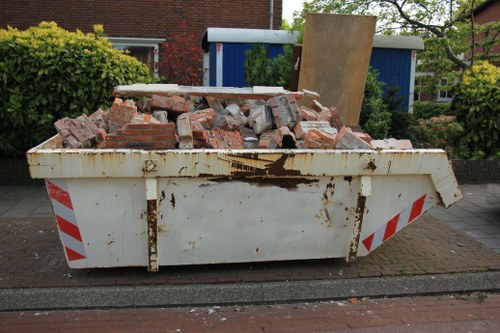 Northolt Skip Hire maintains this Health and Safety Policy to set out clear, practical controls for the safe provision of skip hire and rubbish collection services. This document describes the approach we take to manage risk across our waste removal operations, the responsibilities of our team and contractors, and the procedures we apply to protect employees, customers and the public. It is intended to be a concise, accessible statement of intent and a framework for safe working, applicable to all aspects of our rubbish company and skip hire activities.
Our policy applies to every activity that forms part of the skip hire service, including collection, loading, transport and disposal of waste. The policy supports continuous risk assessment and the implementation of control measures for common hazards associated with a rubbish removal business: manual handling, vehicle movements, hazardous substances, working near roads and falls from height. We will take all reasonable steps to prevent injury and ill health and will treat health and safety as a core element of operational decision-making.
 The objectives of this health and safety policy are to: prevent workplace accidents, reduce occupational exposure to hazards, comply with relevant health and safety obligations and promote a culture of safe working across our rubbish company operations. We commit to regular review of risk assessments and to ensuring that safe systems of work are implemented for the varied tasks inherent in skip hire and waste collection.
Organisation and Responsibilities
Overall responsibility for health and safety rests with senior management, who must ensure that adequate resources are allocated to meet policy commitments. Operational responsibility is delegated to managers and supervisors who are required to ensure safe working practices within their teams. All employees have a duty to cooperate with safety procedures and to report hazards or unsafe acts promptly. Clear lines of responsibility are defined so that everyone understands their role in preventing harm.
 Key responsibilities include:
- Senior management: policy approval, resourcing and performance oversight;
- Supervisors and team leaders: implementation of risk assessments, safe systems and immediate corrective actions;
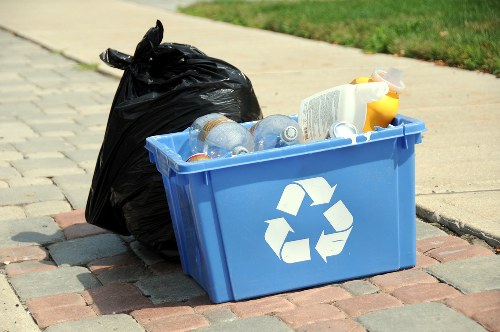
- Drivers and operative staff: safe vehicle operation, correct loading and segregation of waste and adherence to permit requirements;
- All staff: personal responsibility for working safely and reporting incidents or near misses.
Contractors engaged to support skip hire or rubbish clearance must comply with this policy and provide evidence of competence and their own safety arrangements. We will include safety expectations in procurement and tendering processes for waste management services.
Risk Management, Controls and Safe Systems
Risk assessments are carried out for routine and non-routine tasks and are recorded. Controls follow the hierarchy of risk control: elimination, substitution, engineering controls, administrative measures and personal protective equipment (PPE). For rubbish collection and skip hire operations, controls typically include vehicle and equipment maintenance, exclusion zones during loading, use of mechanical aids for manual handling, and clear segregation of hazardous materials. Emergency procedures are in place for spills, vehicle incidents and hazardous waste discoveries.
Training, competence and supervision are essential controls. All relevant staff receive induction safety training, job-specific instruction and ongoing refresher training. Training covers manual handling, safe loading procedures, vehicle safety, use of lifting equipment and the safe handling of potentially hazardous waste types. Records of training and competence checks are maintained and reviewed periodically.
 We operate a permit-to-work process for higher risk tasks, and routine inspections are scheduled to verify compliance. Where incidents occur, they are investigated to identify root causes and to prevent recurrence. Lessons learned are communicated across the rubbish company operations and incorporated into revised procedures as necessary.
Monitoring and performance evaluation include regular audits, incident reporting, and key performance indicators related to accidents, near misses and corrective actions. Senior management reviews the outcomes of audits and incident investigations to ensure the effectiveness of controls. We commit to continuous improvement through corrective action plans and periodic policy review.
 Health surveillance is arranged where there is a potential for exposure to harmful substances or excessive noise. Welfare facilities and first aid provision are maintained to a standard that supports the wellbeing of staff engaged in waste removal and skip hire operations. Employees are encouraged to raise health and safety concerns, and a non-punitive reporting culture is promoted.
Policy review: This policy will be reviewed at planned intervals and after significant changes to operations, incidents or changes in legislation. The aim is to ensure that the safety arrangements for our skip hire and rubbish collection services remain current, practical and effective. Commitment to safety is embedded in our operational planning and daily activities, and every employee is expected to contribute to a safe workplace.